

Talking with young children about caring for their bodies and minds can feel abstract. How do you explain “managing stress” or “eating for energy” to a four-year-old? This is where a good story works its magic. When a favorite character takes a deep breath or tries a new healthy food, these big ideas become relatable and easy to understand. Books give us a gentle, shared language for well-being. We’ll explore how to use seasonal wellness books, community support, or reflections to make storytime a powerful tool for building a strong foundation of health this winter.
Key Takeaways
- Prioritize reading for mental wellness: Use books as a tool to calm your mind, reduce stress, and build emotional resilience for the whole family. It’s a simple way to step away from screens and find a quiet, restorative break.
- Build a comforting reading routine: Turn reading into a cherished family habit by creating a cozy reading nook and setting aside a predictable time each day. This consistency offers a comforting structure that helps everyone unwind and connect.
- Use stories to model healthy habits: Select age-appropriate books about nutrition, sleep, and managing emotions to open up natural conversations. This approach gently introduces wellness concepts and builds a foundation for lifelong well-being.
How Reading Supports Your Winter Wellness
As the days grow shorter and we spend more time indoors, the simple act of opening a book can become a powerful tool for family wellness. Reading together, or on your own, offers more than just a way to pass the time. It’s an opportunity to connect, recharge, and find comfort during the colder months. By intentionally making space for stories, we can support our mental health, ease the winter blues, and establish comforting routines that bring warmth and light to the season. It’s a simple practice with profound benefits for every member of the family.
Can Reading Really Improve Your Mental Health?
Stepping away from screens and into the pages of a book gives our minds a much-needed rest. Reading can help calm your brain, allowing you to focus on a single narrative and tune out daily stressors. For adults, this provides a quiet moment of self-care and a chance to gain a fresh perspective. For children, following a character’s journey helps them understand complex emotions and develop empathy. Stories remind us that we are not alone in our experiences, fostering a sense of connection and belonging that is essential for mental well-being, especially during quieter seasons.
Insights from Research and Expert Perspectives
This connection between reading and wellness is something experts consistently point to. They note that books have a unique ability to teach and heal, offering a chance for stillness in our busy lives. This quiet practice can help calm your mind, change your perspective, and reduce feelings of isolation, which can be more common in winter. By engaging with stories, we build emotional resilience and approach the season with a sense of calm and new understanding. The right books serve as a gentle reminder to encourage you to slow down, practice self-care, and find joy in the quiet moments that make this time of year special.
Let Books Light Up Your Winter Days
Winter naturally invites us to slow down and turn inward, and books are the perfect companions for this quieter time. They offer a gentle way to process feelings and explore new ideas from the comfort of home. Stories can teach, heal, and help you better understand your own life. Sharing a book as a family creates a pocket of warmth and connection, turning a chilly evening into a shared adventure. These moments of togetherness can be a simple yet effective way to counter feelings of isolation and find joy in the season’s slower pace.
Build a Comforting Reading Routine
One of the best ways to embrace reading this winter is to build a cozy ritual around it. This doesn’t need to be complicated. It can be as simple as dedicating 20 minutes after dinner to reading together on the couch with warm blankets and soft lighting. Creating an inviting atmosphere makes reading feel like a special treat rather than a task. By establishing consistent winter wellbeing habits, you create predictable moments of calm and connection that your family can look forward to all season long.
What to Look for in a Winter Wellness Book?
When the days get shorter, the right book can be a powerful tool for well-being. A great winter wellness book isn’t just about a good story; it’s about finding one that helps your family feel grounded, inspired, and cared for during a season that encourages us to turn inward. The best books for this time of year often share a few key qualities. They focus on themes that support mental and physical health, transforming reading time into a meaningful practice that nurtures everyone. Look for stories and guides that touch on self-care, resilience, and healthy habits.
Understanding the Broad Scope of Wellness Literature
Wellness literature isn’t a formal genre you’ll find in a bookstore, but rather a way of choosing stories that nurture a child’s whole self. These books touch on everything from physical health—like the importance of sleep or trying new foods—to emotional resilience, such as learning to manage big feelings or practicing kindness. The goal is to find stories that open up gentle, natural conversations about taking care of our bodies and minds. When children see a character work through a challenge, it gives them the language and a safe space to understand their own experiences. By weaving these themes into your reading routine, you help build a foundation for lifelong well-being, showing your child that health is about feeling good inside and out.
Choosing Books on Self-Care and Mindfulness
A wonderful winter wellness book often encourages you to slow down and practice self-care. It might not be a how-to guide, but its story gently reminds you to be present and tend to your own needs. These books can inspire you to create an inviting atmosphere, making reading a comforting ritual. Think of books that make you want to curl up with a warm blanket. They help you disconnect from daily pressures and reconnect with yourself, fostering a sense of calm that is so valuable during the quieter winter months.
Find Inspiration in Stories of Resilience
Winter can be a time for reflection, and stories that explore resilience are incredibly powerful. Reading about characters who face challenges and find their way through can help children and adults feel less alone. These narratives offer new perspectives and can calm the mind by showing that it’s possible to find strength when things feel hard. A great wellness book doesn’t shy away from challenges; instead, it models coping strategies and emotional strength in a supportive, hopeful way. It’s a way to build empathy and find encouragement within the pages of a story.
Discover Books That Inspire Healthy Habits
Sometimes, the best wellness book is one that gives you simple, actionable ideas to support your family’s health. These books can be a source of inspiration for creating routines that keep everyone feeling their best. They might offer tips on everything from nourishing winter foods to fun indoor activities that keep you moving. By focusing on small, consistent habits like prioritizing sleep or finding moments for quiet time, these books serve as a friendly guide to seasonal well-being. They empower you to take practical steps that make a real difference in your family’s vitality.
Key Concepts from Modern Wellness Books
Many of today’s most insightful wellness books are written for adults, but their core ideas are universal. By understanding these concepts, we can find simple, meaningful ways to introduce them to our children. Translating these big ideas into child-friendly language helps build a strong foundation for emotional intelligence and resilience. It’s not about sitting them down for a formal lesson, but about weaving these principles into everyday conversations and storytimes. When we explore themes of rest, purpose, and empathy, we give our children the tools to understand themselves and the world around them, nurturing their well-being from the very beginning.
Embracing Rest: The Idea of “Wintering”
In her book, “Wintering,” Katherine May beautifully describes the importance of rest during difficult or quiet times. She frames it as a natural and necessary cycle, much like the seasons. This concept is a wonderful way to teach children that it’s okay to slow down. You can explain that just as nature rests in winter, our bodies and minds sometimes need a “wintering” period, too. This might mean choosing a quiet afternoon at home over a busy outing or simply acknowledging that it’s okay to feel tired. By embracing the concept of “wintering,” we can help our children see rest not as a failure to be productive, but as a healthy and essential part of life.
Finding Your Purpose with “Ikigai”
The Japanese concept of “ikigai,” or “a reason for being,” is explored in the book of the same name by Héctor García and Francesc Miralles. While finding one’s life purpose is a big topic, we can introduce a simpler version to children by paying attention to what brings them joy. A child’s ikigai can be seen in the activities that fully capture their attention, whether it’s building elaborate block towers, caring for a pet, or telling imaginative stories. By noticing and encouraging these passions, we help them connect with what makes them feel happy and fulfilled. This fosters a sense of self-worth and shows them that their unique interests are valuable and important.
Connecting Personal Wellness to Broader Issues
True well-being isn’t just about our personal habits; it’s also connected to our environment and our relationships with others. Some of the most impactful modern wellness books challenge us to look beyond ourselves and consider the bigger picture. They remind us that stress can come from many sources and that empathy is a powerful tool for both personal and collective healing. Introducing these ideas helps children develop a compassionate worldview and understand the importance of kindness, not just for others, but for themselves as well. It’s a way to build a generation that is both emotionally aware and socially conscious.
Dr. Gabor Maté on Trauma, Stress, and Health
Dr. Gabor Maté’s work, particularly in “The Myth of Normal,” highlights the deep connection between emotional stress and physical health. For children, this is a vital lesson in validating their feelings. When a child is upset, their stress is real, and their body feels it. Dr. Maté’s perspective encourages us to respond with compassion rather than dismissal. Instead of saying, “You’re fine,” we can say, “I see that you’re having a hard time.” This approach teaches children that their emotional experiences matter and that caring for their feelings is a key part of staying healthy.
Understanding and Healing from Systemic Stress
In books like “Black Fatigue,” Mary-Frances Winters explores how broader societal issues can impact well-being. While the specifics may be for older readers, the core message about empathy is universal. We can use this idea to start conversations with children about kindness and fairness. Reading stories that feature diverse characters and experiences helps build a foundation of understanding. It teaches children to recognize that everyone has a unique story and that supporting one another makes our entire community stronger. This fosters a sense of connection and encourages them to be compassionate friends and neighbors.
Seasonal Wellness Books for a Calmer Mind
The shorter days and colder weather can sometimes feel heavy, making it more important than ever to be intentional about our mental well-being. Reading offers a quiet, accessible retreat from daily pressures. It’s a simple practice that can ground you in the present moment, help you process complex emotions, and provide a much-needed sense of calm. Choosing the right book can feel like a conversation with a wise friend, offering perspective and comfort when you need it most. Below are a few recommendations organized by what you might be seeking this season, whether it’s a moment of peace, a story of strength, or simply a way to unwind.
Books to Help You Stay Present
Winter invites a slower pace, and reading is a perfect way to embrace it. When you settle in with a book, you create a space free from digital notifications and to-do lists. This simple act can help calm your brain, offering a new perspective and a feeling of connection that combats loneliness. It’s a form of mindfulness that requires nothing more than your attention. For a read that encourages this state of mind, try The Things You Can See Only When You Slow Down by Haemin Sunim. This gentle book offers wisdom on everything from love and relationships to work and rest, guiding you toward a more peaceful and present way of being.
Stories to Build Your Emotional Resilience
Stories are powerful tools for working through life’s challenges. They show us that we aren’t alone in our struggles and offer roadmaps for moving through difficult times. As one writer notes, books can teach and heal by helping you make sense of your own life story. This is true for children, too. Allowing our kids to see characters work through sadness or frustration helps them build their own emotional intelligence. Katherine May’s work explores how supporting children through sadness helps them become more resilient. Her book, Wintering: The Power of Rest and Retreat in Difficult Times, is an excellent read for any adult looking to find strength in periods of quiet and uncertainty.
Reads for Finding Calm and Easing Stress
In busy family lives, finding moments of quiet can feel impossible. Yet, even small pockets of relaxation can make a significant difference in managing stress and anxiety. Think of reading as a scheduled appointment with yourself. The simple commitment to make time for things you enjoy, like setting aside 30 minutes with a book, can become a restorative daily ritual. For a story that offers a true escape, consider The House in the Cerulean Sea by T.J. Klune. It’s a warm, funny, and deeply comforting novel about finding family in unexpected places. It’s the kind of book that leaves you feeling lighter and more optimistic, a perfect antidote to a stressful day.
Winter Reading for a Healthier Body
While we often focus on mental wellness during the darker months, our physical health is the foundation for everything else. The right books can be wonderful tools for introducing and reinforcing healthy physical habits with your child. Stories can transform a conversation about eating vegetables or the importance of sleep from a chore into a shared, enjoyable experience. They provide a gentle, engaging way to talk about caring for our bodies, whether it’s through nourishing food, joyful movement, or restorative rest.
For young children, abstract ideas like “eating healthy” or “getting enough sleep” can be hard to grasp. But when they see a favorite character enjoying a colorful plate of fruit or snuggling into bed for a long winter’s nap, these concepts become tangible and appealing. Using books as a starting point opens up natural conversations about why our bodies need certain things to feel good. It’s a way to connect with your child on these important topics without pressure, building a foundation of well-being together, one story at a time.
Find Inspiration for Healthy Winter Eating
Winter is the perfect time to cozy up with stories that celebrate warm, nourishing foods. Look for books that feature characters enjoying seasonal fruits and vegetables, like citrus, carrots, and leafy greens. Stories centered around cooking or sharing meals can make healthy eating feel like a fun and communal activity. Reading about a character trying a new soup or baking with whole grains can inspire your own little one to be more adventurous at the dinner table. These narratives help build a positive connection to the foods that support a strong immune system and keep us feeling our best all season long.
Books to Motivate Your Indoor Movement
When it’s too cold for the playground, finding ways to move our bodies indoors is essential. Books that inspire movement are a fantastic resource for getting the wiggles out. Seek out stories about dancing, building forts, or practicing yoga. These narratives can act as a springboard for your own family’s indoor activities. After reading, you can try out the dance moves from the book or build a pillow fort in the living room. Making movement a part of your daily story time helps your child see physical activity as a source of play and joy, establishing a healthy habit that isn’t dependent on the weather.
Read Your Way to Better Sleep and More Energy
Quality sleep is crucial for a happy, healthy winter, yet it can sometimes be a challenge. A calming bedtime story is a cornerstone of a great sleep routine. Choose books with gentle, soothing narratives that help your child wind down from the day. Stories about hibernation, quiet nights, or characters getting tucked into bed can reinforce the importance of rest. Pairing a book with a warm, caffeine-free drink can also enhance this comforting ritual. Establishing a predictable and peaceful end to the day is one of the best ways to improve your child’s sleep, ensuring they have the energy they need for learning and play.
Sharing Wellness Books with Your Child
Sharing a book with your child is more than just reading words on a page; it’s an opportunity to connect, explore big feelings, and build a foundation for lifelong well-being. Wellness-themed books, in particular, can open up conversations about everything from managing emotions to understanding the importance of rest. The key is to approach this time with intention, turning storytime into a meaningful ritual that nurtures both your child’s mind and your relationship. By creating a warm and consistent reading practice, you can help your child absorb these gentle lessons in a way that feels safe, supportive, and comforting.
Choosing the Right Wellness Stories for Your Child
Choosing the right book is the first step to a great reading experience. For wellness topics, it’s important to find stories that meet your child where they are developmentally. For infants and toddlers, look for board books with simple, rhyming text and clear illustrations that introduce concepts like bedtime routines or different feelings. For preschoolers, you can explore narratives with gentle lessons about navigating change, being a kind friend, and embracing what makes them unique. The goal is to select books that resonate without being overwhelming, allowing your child to naturally connect with the story and its message.
How to Use Stories to Build Healthy Habits Together
Books can be a wonderful tool for introducing and reinforcing healthy habits. Integrating reading into your family’s routine can support both mental and physical wellness in a gentle, accessible way. A story about a bear who loves to eat colorful berries can spark a conversation about nutritious foods, while a book about a sleepy bunny can help ease the transition to bedtime. You can use these narratives to talk about why our bodies need rest, movement, and healthy meals. This approach aligns with a holistic view of child development, where learning and well-being are woven into every part of the day, much like in our EsteamED® curriculum.
Create a Cozy Family Reading Ritual
The environment you create for reading is just as important as the book itself. Making storytime a cozy and anticipated ritual can transform it into a powerful moment of calm and connection. Find a comfortable spot, dim the lights, and snuggle up with soft blankets. Putting phones and other distractions away signals that this is a special, protected time for just the two of you. This consistency helps children feel secure and makes them more receptive to the story’s message. By establishing a predictable reading routine, you’re not just sharing a book; you’re building a cherished memory and a healthy habit that can last a lifetime.
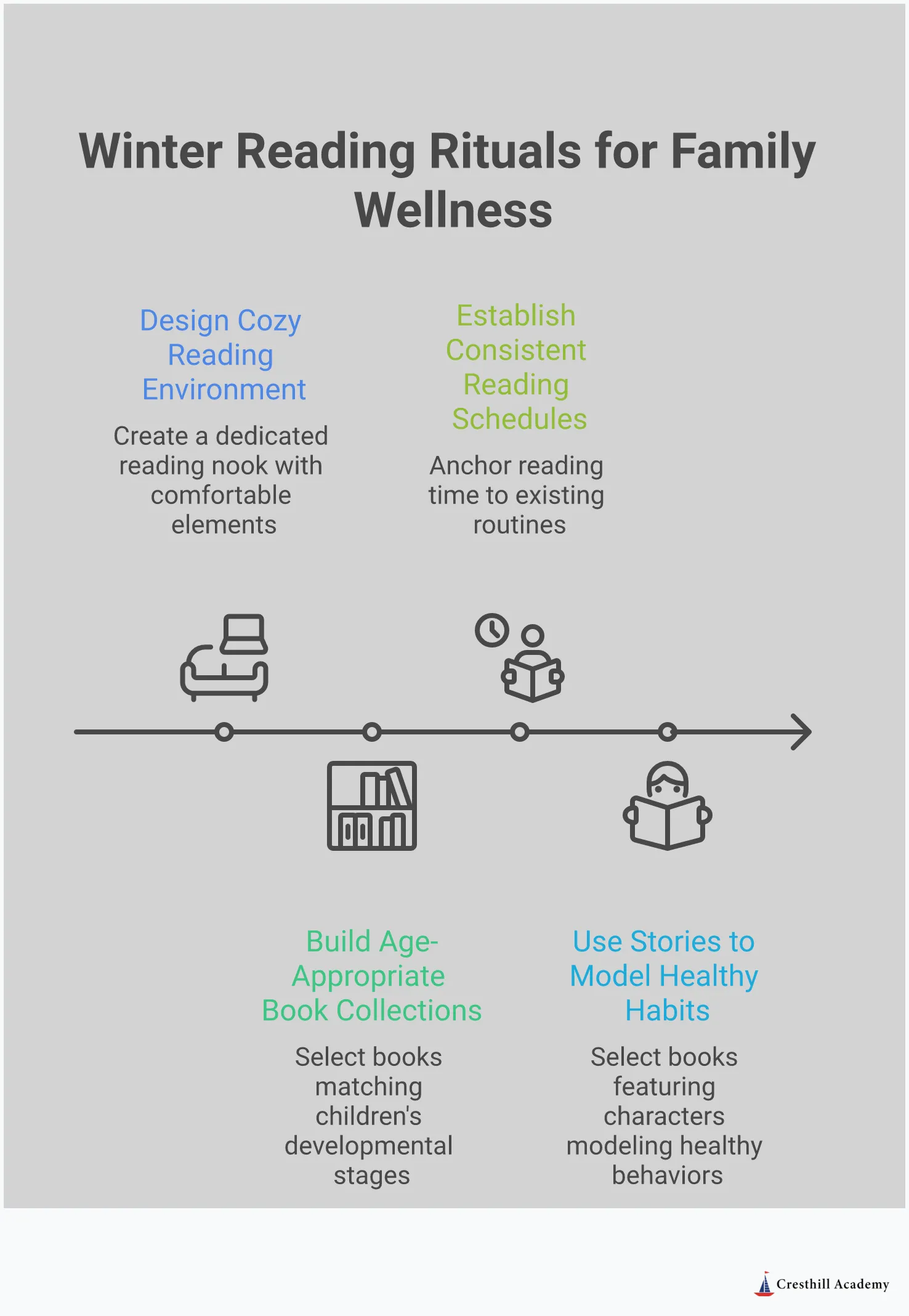
How to Create Your Own Winter Reading Routine
A dedicated reading habit can be one of the most grounding parts of your family’s winter. It creates predictable moments of calm and connection when the days feel short and indoor time is plentiful. By intentionally setting aside time for books, you build a structure that supports everyone’s well-being. It’s about making reading an easy, natural part of your day, not another item on your to-do list. Here are a few simple ways to weave a reading ritual into your family’s winter rhythm.
Find Your Rhythm: Setting a Reading Schedule
The key to any lasting habit is consistency. During winter, a simple daily routine can make a world of difference for both children and adults. Anchor your reading time to another part of your day, like right after school or just before bedtime. This creates a natural cue that it’s time to slow down and connect. Even 15 minutes of shared reading at the same time each day establishes a powerful and comforting ritual. A predictable schedule helps children feel secure and gives the whole family a moment of quiet connection to look forward to.
Create Your Own Cozy Reading Nook
Create a space that makes reading feel like a special treat. You don’t need a separate room; a cozy corner of the living room or your child’s bedroom works perfectly. The goal is to make it inviting. Fill the space with soft pillows, warm blankets, and good lighting. Let your child help pick out a few special items for the nook, giving them ownership over the space. Having a designated spot signals that this is a place for calm and imagination. An inviting atmosphere makes it easier to settle in with a good story and leave the day’s distractions behind.
Combine Reading with Other Self-Care Practices
Integrate reading into your larger wellness practices to show your child that it’s a form of self-care. You can pair story time with other comforting activities, like sipping a warm, caffeine-free tea or listening to calming music. This multi-sensory experience helps everyone relax more deeply. You can also use books as a transition into other healthy habits, like reading a story about sleep before bed. By connecting reading with other winter wellness tips, you reinforce the idea that taking care of our minds is just as important as taking care of our bodies during the colder months.
More Ways to Find Wellness This Winter
Reading is a powerful tool for nurturing your family’s well-being, but it’s just one piece of the puzzle. To create a truly resilient and joyful winter season, you can pair your cozy reading rituals with other simple, mindful practices. This creates a more holistic approach to wellness that supports everyone through the shorter days and colder weather. These activities don’t require a lot of time or special equipment, but they can make a significant impact on your family’s mood, energy levels, and overall health. When you intentionally build these moments into your week, you model self-care for your children in a tangible way.
Think of these as small, intentional moments you can weave into your daily routine. They help ground your family, encourage genuine connection, and build healthy habits that last well beyond the winter months. By combining the quiet comfort of books with gentle movement and mindful pauses, you can create a warm, supportive home environment where your family can truly thrive. These practices are especially valuable for young children, as they help them develop emotional awareness and give them simple tools to manage stress and stay positive. It’s about showing them, through practice, how to care for their minds and bodies.
Practice Mindful Breathing and Meditation
Introducing mindfulness to your children doesn’t have to be complicated. It can be as simple as taking a few moments to pause and breathe together. Even short periods of relaxation each day can help manage stress and anxiety for both children and adults. You can try simple deep breathing exercises before bed or guide your child in a “body scan” where they notice and release tension from their toes to their head. These small practices build emotional resilience and give your child a valuable tool for self-regulation that they can use anytime they feel overwhelmed.
Try Gentle Indoor Movement
When it’s too cold to play outside, finding ways to move indoors is essential for physical and mental health. Gentle movement helps release pent-up energy, improves mood, and supports a healthy immune system. You don’t need a home gym to make it happen. Stay active indoors with a family dance party in the living room, a session of kid-friendly yoga, or a fun stretching game. The goal is simply to get bodies moving and hearts pumping, turning a dreary afternoon into an opportunity for joyful, shared activity that benefits everyone.
Embrace Warm Rituals and Quiet Reflection
Winter is the perfect time to lean into cozy, comforting rituals that strengthen family bonds. These moments of connection create a sense of security and warmth that can counter the winter blues. You can create an inviting atmosphere by dimming the lights, snuggling under a soft blanket, and enjoying warm drinks like herbal tea or cocoa together. Use this quiet time for reflection, perhaps by sharing one good thing that happened during the day. These simple, repeated rituals become cherished memories and a reliable source of comfort for your family.
Your Slow Living Winter Wellness Book List
To help you get started, we’ve gathered a few ideas for your family’s winter reading list. These suggestions are organized by wellness goals, from finding calm during a busy season to inspiring healthy habits in your children. Think of this as a starting point for your own explorations at the library or local bookstore. The best wellness book is one that speaks to you and your family’s needs right now.
Whether you’re looking for a quiet moment of reflection for yourself or a cozy story to share with your child, the right book can be a wonderful companion. It can provide comfort, spark new ideas, and help you connect with yourself and your loved ones. We hope these categories inspire you to find stories that support your family’s well-being all season long.
For Managing Stress and Anxiety
Winter can feel both hectic and isolating. A good book offers a quiet retreat, a way to step back from daily pressures and find a moment of peace. Reading can help your mental health by calming your brain, changing your perspective, and reminding you that you aren’t alone in your experiences.
Consider novels that provide a gentle escape or non-fiction books centered on mindfulness and slow living. These stories can help ground you in the present moment and reduce feelings of overwhelm. The simple act of focusing on a narrative gives your mind a rest, allowing you to return to your day with a renewed sense of calm. Look for books that feel like a warm conversation with a trusted friend.
Books on Healing, Grief, and Mental Health
Sometimes, the quiet of winter brings deeper feelings to the surface. If you’re navigating a period of healing or loss, the right book can be a compassionate companion. Megan Devine’s It’s OK That You’re Not OK offers a kind and validating guide to living with grief, reminding us that it’s a journey, not a phase to rush through. For a more personal narrative, Stephanie Foo’s What My Bones Know explores healing from complex trauma, showing that the path to recovery is often messy but deeply human. And perfectly suited for the season, Katherine May’s Wintering teaches the importance of embracing periods of rest and retreat, helping you find strength in stillness.
Guides for Letting Go and Finding Purpose
Winter can also be a time for reflection, a chance to let go of what no longer serves you and reconnect with what truly matters. If you’re feeling overwhelmed by daily pressures, How to Let Things Go by Shunmyo Masuno offers 99 simple, Zen-inspired tips for releasing the need for control. For those seeking a deeper sense of direction, Ikigai: The Japanese Secret to a Long and Happy Life by Héctor García and Francesc Miralles is a wonderful resource. It introduces the concept of finding your “ikigai,” or reason for being, helping you discover joy and purpose in your everyday life.
For Building Resilience
The stories we read can become a source of strength. Memoirs, biographies, and even fictional tales of characters overcoming challenges can be incredibly inspiring during the darker months. These narratives remind us of our own capacity for growth and perseverance, showing us what’s possible even when things feel difficult.
When you see a character work through a problem or read about a real person’s journey through adversity, it can offer a new lens for your own life. Books can teach, heal, and help you understand your own life story in a new light. Choosing a book that focuses on themes of hope, courage, and resilience can be a powerful way to nurture your own inner strength this winter.
Books on Mindset and Overcoming Obstacles
Winter can be a season for reflection, offering a quiet space to strengthen our internal resolve. Books that explore mindset are particularly powerful during this time, providing tools to reframe challenges and build resilience. For a read that transforms your perspective on life’s hurdles, consider The Obstacle Is the Way by Ryan Holiday. This book draws on timeless wisdom to show how every challenge we face holds an opportunity for growth. It’s a practical guide to turning trials into triumphs, a mindset that is invaluable for navigating the complexities of modern family life with grace and strength.
Another excellent choice is Wintering: The Power of Rest and Retreat in Difficult Times by Katherine May. This book beautifully argues for the necessity of fallow periods in our lives. It encourages us to embrace moments of difficulty not as failures, but as essential opportunities to rest and renew. May’s perspective helps us find strength in the quiet, reminding us that periods of retreat are a natural and vital part of a well-lived life, preparing us for the seasons of growth that follow.
Reads for Fostering Creativity and Confidence
Nurturing your own creativity and confidence is one of the best ways to model these essential traits for your children. If you’re looking to reconnect with your creative spirit, Rick Rubin’s The Creative Act: A Way of Being is a wonderful guide. It’s less of a how-to and more of a meditation on what it means to live a creative life. Rubin encourages readers to embrace curiosity and openness, reminding us that creativity isn’t just for artists; it’s a way of seeing and engaging with the world that can bring more joy and fulfillment to anyone’s life.
For a more hands-on approach to building a life that feels authentic and fulfilling, try Designing Your Life by Bill Burnett and Dave Evans. This book applies design thinking principles to help you create a life that works for you. It’s filled with practical exercises and tools that empower you to take actionable steps toward your goals. By encouraging experimentation and reframing problems, it helps you build confidence in your own decision-making, giving you a sense of agency over your personal and professional path.
For Supporting Your Physical Health
Wellness isn’t just about our mental state; it’s also about caring for our bodies. Books can be a fantastic resource for learning about seasonal health. Consider picking up a cookbook focused on nutritious winter recipes. A balanced diet helps support your immune system and gives you the energy you need to feel your best.
You might also explore books on topics like creating a better sleep routine or finding simple ways to stay active indoors. These practical guides can provide actionable tips that are easy to incorporate into your family’s daily life. Learning more about how to care for your physical health is an empowering step toward a more vibrant and healthy winter season.
For Comfort and Inspiration
Winter is a natural time for turning inward, and the right book can be a source of light and warmth. Sometimes, what we need most isn’t a guide or a set of instructions, but a story that offers a sense of hope and connection. These are the books that remind us of the good in the world, that make us feel understood, and that provide a gentle escape from the demands of daily life. Sharing these kinds of stories as a family creates a pocket of warmth, turning a quiet evening into a shared adventure. They can teach and heal, helping you and your child make sense of the world and your place in it.
Hopeful Stories and Gentle Escapes
Look for narratives that feel like a deep, calming breath. These stories don’t necessarily shy away from challenges; instead, they model emotional strength and coping strategies in a supportive, hopeful way. Reading about characters who find their way through difficult times can help both children and adults feel less alone in their own experiences. A gentle escape into a beautifully told story can also calm your brain, allowing you to tune out daily stressors and simply be present. These are the books that leave you feeling a little lighter, a little more optimistic, and ready to face the day with renewed perspective.
For Sharing with Your Little Ones
Sharing a story is one of the most powerful ways to connect with your child and introduce them to important ideas. For winter, look for picture books that celebrate the quiet beauty of the season. Stories like Ezra Jack Keats’s The Snowy Day or Kevin Henkes’s Winter is Here can spark conversations about change and the world around them.
These books often contain gentle lessons about rest, patience, and appreciating small moments. You can also find wonderful anthologies filled with seasonal poems, simple recipes, and easy craft ideas to do together. Reading these stories creates a cozy ritual that not only builds literacy skills but also helps your child feel secure, loved, and connected to the rhythm of the season.
Related Articles
- A Day in the Life: Inside a Quality Daycare Center
- Toddler Tantrums in Public: Calming Tips for Parents | Cresthill Academy
- How Daycare Supports Social & Emotional Development
Frequently Asked Questions
How much time do we really need to spend reading to feel the benefits? It’s less about the clock and more about the consistency. Aim for connection, not a specific number of minutes. Even 15 minutes of focused reading together each day can create a powerful and comforting ritual. The goal is to build a predictable moment of calm that your family can look forward to, which is far more valuable than trying to meet a time-based goal.
My child is very active and won’t sit still for a story. Do you have any suggestions? This is completely normal for young children. Try making reading a more active experience. Let your child turn the pages, act out the characters’ movements, or build a cozy fort to read in. The objective is to create a positive and joyful association with books, not to enforce perfect stillness. Reading can be a time for wiggles and imagination, too.
What if I’m too tired to read a full story at the end of a long day? Give yourself grace. The most important part of a bedtime ritual is the warm connection, and that can take many forms. On nights when you’re exhausted, you can look at a picture book together and make up your own simple story, listen to a calming children’s audiobook, or simply snuggle and talk quietly about the day.
How do I choose a “wellness” book for my child that doesn’t feel like a heavy-handed lesson? The best wellness books are simply good stories. Look for narratives with relatable characters who navigate feelings, friendships, or challenges in an authentic way. The message should be embedded in the story, not spelled out like a moral. A beautiful book about a character being brave or kind is a wellness book in its own right.
Besides reading, what’s one other simple wellness habit we can start as a family this winter? Try incorporating a brief moment of shared reflection into your day. For example, you could go around the dinner table and have each person share one good thing that happened. This simple practice encourages gratitude and positive thinking, and it strengthens your family connection by creating a safe space to share experiences.