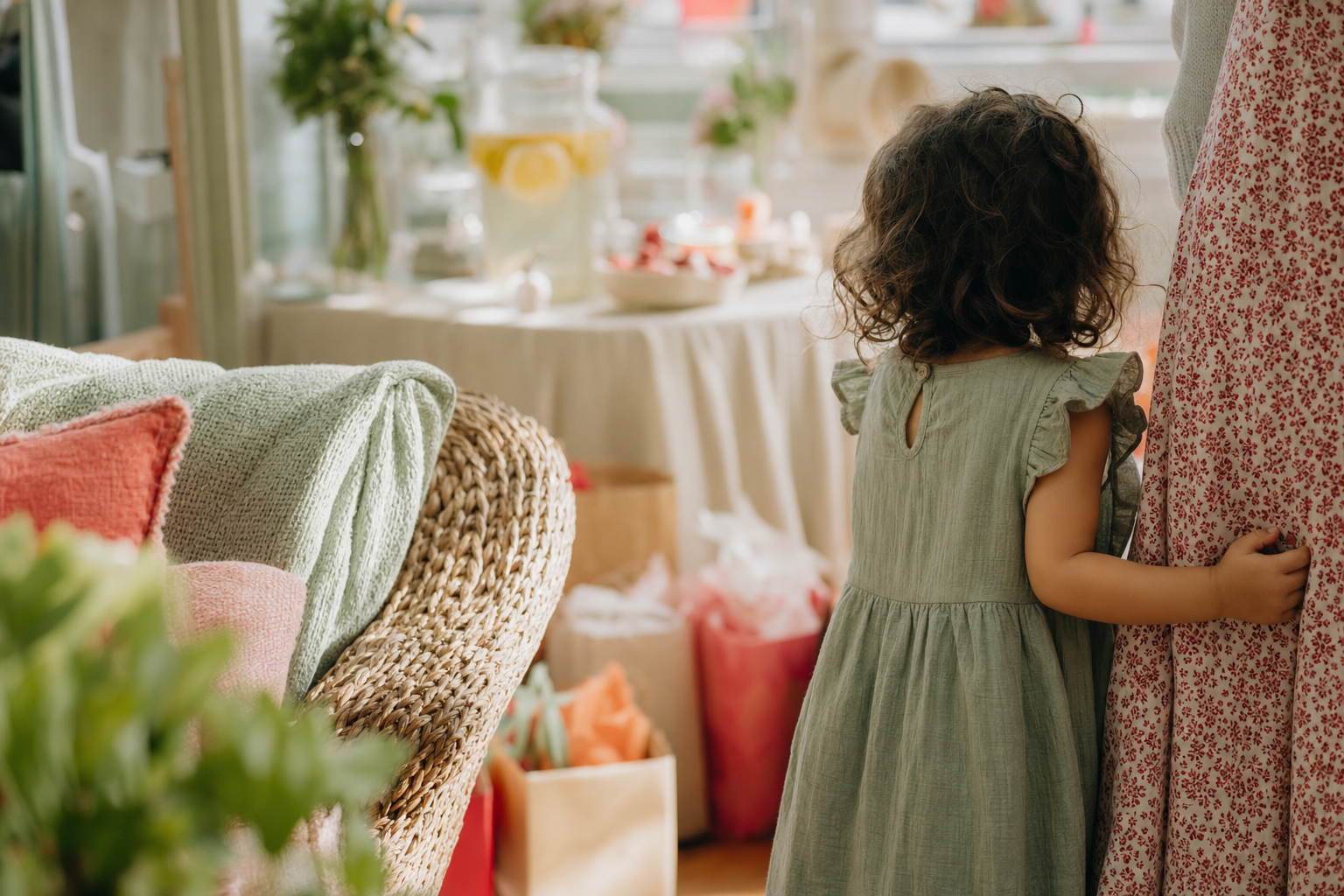
If your toddler clings, hides, or stares silently at relatives, the Merck Manual’s overview of stranger anxiety describes what you’re probably seeing as ordinary wariness of new faces, normal when it begins at about 8 to 9 months and something that usually abates by age 2 years. So the best help for shy toddler family gatherings is simple. Stay close, let a wave or a high-five count as your child’s hello, and give them time to warm up beside you. Below, you’ll find why it happens, what it’s quietly building in your toddler, and the words that keep Grandma on your side.
Key Takeaways
- Stranger wariness has a typical timeline: Wariness of new faces commonly begins around 8 to 9 months and usually eases by about age 2, so a clingy toddler at a holiday table is often right on schedule.
- Choices protect a child's comfort: Offering a hug, high-five, or wave lets your toddler greet relatives in a way that feels safe while still honoring the family moment.
- Your closeness is the buffer: Responsive relationships with trusted adults support healthy brain development and help buffer children from stress, so staying near your toddler helps them warm up.
Is stranger wariness a normal stage?
Yes. Pediatric references from the Merck Manual to Nemours’ KidsHealth treat fear of new faces and clinging to a parent as ordinary for young kids. That’s good news for you. When your child freezes at the front door, they’re usually right on schedule, so you can meet the moment calmly.
Here’s why we read that wariness as growth, too. To be wary of a stranger, your toddler has to sort the people they count on from the people they don’t. That sorting has to come from somewhere. Harvard’s Center on the Developing Child points to responsive relationships as a driver of healthy brain development. We’d read a toddler’s wariness as one visible sign of all that: your steady, responsive care, answering their cries and smiles, helps teach them whose faces mean safety. And a face that doesn’t fit that map gets a careful look first.
How strongly the wariness shows up is a separate question, and temperament answers it. Some children are naturally slow to warm up, the kids who need extra time in busy, social settings. So two toddlers can be at the very same stage and still look nothing alike at a party. One’s on a cousin’s lap before dinner starts. Another watches from yours all afternoon. Both fit what the research describes.
Reading the timeline honestly
Go back to that Merck window for a second. If your toddler buries their face in your shoulder at a holiday table somewhere between their first and second birthdays, they’re squarely inside it. And “usually” is doing real work in that sentence. Our reading is that it describes a typical range rather than a deadline, so a child who’s still wary a bit beyond that window hasn’t failed anything. Children differ in temperament, and the timing can vary right along with it.
What the references can’t tell you is your child’s own pace. They can say a behavior is common. They can’t say how long your toddler needs before a crowded room feels safe, and you’ll learn that by watching. If you want the wider view of how these early social skills grow, our guide to social-emotional learning in early childhood walks through the bigger picture.
Wariness at a family dinner is also a separate question from school readiness, which has its own signs and timeline. We unpack those in our piece on emotional readiness for preschool. For now, the most useful thing these references give you is permission to stop worrying that something’s wrong.
| Founded | 2010 |
|---|---|
| Locations | 8 |
| Programs | 4 |
| Curriculum | EsteamED Curriculum |
| Curriculum pillars | 8 |
| Key features | 12 |
| Audience | Northern New Jersey families |
Why can Grandma suddenly look like a stranger?
Toddlers can suddenly treat grandparents like strangers, and pediatric references say you should expect it. Knowing that ahead of time takes some of the sting out, for you and for the grandparent standing in the doorway with open arms.
The MSD Manual’s guide to stranger anxiety says young children may suddenly see grandparents as strangers, and that parents need to be aware this is to be expected. Hold onto “suddenly.” Your toddler may have sat happily on Grandpa’s knee last spring and turn away from him at the next visit. That shift fits the pattern the manual describes.
New faces, even family ones
KidsHealth, from Nemours, makes the same point from another angle. New faces can seem scary to young kids, even a new babysitter or a relative, and they may cry or cling to a parent. Put the two sources side by side and here’s our reading: for a toddler, familiarity seems to come from contact. A word like “Grandma” doesn’t carry much on its own, especially when visits are spread out. Time together is what makes a face feel known again.
Seeing it that way helps you protect Grandma’s feelings as much as your child’s. If you tell her beforehand that this is a normal, well-described stage, she has a reason to wait patiently. And if it’s a holiday meal, give everyone something small to share, a song or a snack you set out together, so that first hug stops being the main event.
How do busy rooms change a shy child’s behavior?
Busy rooms can overwhelm a shy child, and that overload often comes out as crying, protesting, or asking to leave. If you read those signals as too much input, you’ll reach for comfort. That’s usually what a wary toddler needs right then.
Zero to Three’s guidance on shy or slow-to-warm-up temperaments notes that some children seem overwhelmed in busy, social settings like a mall, a playground, or birthday parties. They may cry, protest, or want to leave. Now picture your family gathering from knee height. There’s noise, overlapping voices, grown-ups leaning in close, and a schedule that ignores nap time entirely.
What overload can look like at the table
Your child might stop talking, refuse the high chair, hide behind your legs, or melt down when a cousin grabs a toy. KidsHealth describes crying and clinging as common responses to new faces, so seeing them in a crowded room fits a familiar pattern. From the outside, some of these moments look a lot like tantrums. If you’re trying to tell the two apart, our post on toddler tantrums versus sensory meltdowns explains how to respond to each.
Timing piles on. A party that runs into late afternoon meets a tired toddler who’s already running low, the same dynamic we explain in our post on the late-afternoon crash. Our view is that the kindest read of a meltdown at a crowded party is the plain one. Your child has had more than they can handle. So head for a quieter spot, and stay right there with them.
How does a responsive adult buffer a shy child?
You buffer a shy child by staying close, noticing their signals, and answering warmly. Child-development research says that back-and-forth helps your child’s brain grow and cushions them when things get hard. At a gathering, it mostly means being the steady home base your toddler can always come back to.
The Harvard Center on the Developing Child says responsive relationships with adults do double duty: they promote healthy brain development and they provide buffering protection. We’d call that one of the most useful ideas you can carry into a crowded room. Just by being there and answering your child, you’re doing real work in how they cope.
What responsiveness looks like in a crowded room
It’s small and quiet. You stay within reach. When your toddler goes silent or presses into your side, you answer with a hand on their back or a few calm words. Put Harvard’s idea next to the clinging the manuals describe, and you get our reading of why closeness works. Your toddler holds on to you because you’re their safe spot. And that same safe spot is what lets them look around, watch the cousins, maybe wander a few steps. So those first steps away from your lap count as progress.
Narrating helps too. Something like “That’s your uncle. He’s laughing at the dog” tells your toddler about a room they can’t read yet on their own. We’d also bet on naming feelings out loud (“It’s loud in here. You’re staying close to me”) as early groundwork for the words kids later use themselves. We go deeper on that in our post on building emotional vocabulary in toddlers.

A simple plan for before, during, and after the gathering
It can help to think about a family gathering in three stretches: the days before, the hours there, and the evening after. It’s a bit of thought up front, but most of it slips into things you’re already doing. And each step ties back to what the research says about wariness, clinging, and wanting you nearby, so the plan fits where your child is right now.
Before: preview the people. Ahead of time, you might share photos of who’ll be there and say their names in an easy, matter-of-fact way. New or rarely seen faces are what tend to set off wariness, so a little advance familiarity can help. Talk through the plan, too. Who might open the door? Where will you sit? What food could be on the table? Knowing what’s coming is reassuring for lots of little kids.
Arrive before the room fills. If your host is fine with it, getting there early lets your toddler meet the space and a few people before the noise builds. Walking into a packed living room asks a wary child to take in everything at once. That’s the busy, social setting Zero to Three describes as overwhelming for slow-to-warm-up kids, and an early arrival softens it.
During: pick a home base
Choose a home base as soon as you get there: your lap, a chair by the wall, or a quiet corner with a favorite toy or book. Let your toddler watch from there as long as they need. The AAP’s HealthyChildren site is direct about this, advising parents to not pressure a child into being brave. Peeking out at the action from your lap is a real step, even when it looks like nothing’s happening.
Build in breaks. A change of scene, such as a little time outdoors, a quiet room, or a calm spot for a diaper change, can help settle a child who’s starting to fray. Offer breaks early, before your child is past coping, and treat them as part of the plan. Slipping out of the main room for a bit is a smart move.
After: wind down at home. A big social day can leave toddlers wired or teary at bedtime. Keep the evening quiet and lean on your usual rhythm. Our post on creating a calm bedtime routine explains why consistency helps. Afterward, bring up the gathering warmly now and then (“Grandma loved your wave”). That gives your child a happy memory to carry into the next visit.
Scripts that turn relatives into allies
The right words, said ahead of time, can turn a hug-seeking relative into a teammate. Most grandparents want connection, and lots of toddlers can offer some version of it when the terms feel safe. Scripts give everyone a way to meet in the middle, and nobody has to lose face.
Zero to Three’s guidance on teaching toddlers about consent suggests offering a choice: “Do you want to give Grandma a hug, high-five, or wave?” Here’s our position, said plainly. Offer the choice, and drop the coaxing. A coaxed hug asks your child to push past a wariness that’s a normal part of this stage, and pressure to be brave tends to make a cautious little one hold back even more. A choice hands your toddler the one thing they can control, which is how close they get. We’d bet that’s what brings them back toward Grandma on their own, and Grandma still gets a greeting in the meantime. A wave from across the room counts, so give it a warm response.
What to say to Grandma before the visit
A quick call or text before the day sets expectations kindly. You might say, “She’s in a shy stage right now, and pediatric references say it’s normal at this age. If you give her some time and let her set the pace, she may come to you on her own.” Or try, “He warms up slowly. The best thing you can do is sit nearby, play with something interesting, and let him come over when he’s ready.” When you frame it as advice with a clear job attached, a grandparent feels trusted.
If a relative leans in for a hug at the door, you can step in without embarrassing anyone. “We’re doing waves today. Can you give Grandpa a wave?” And if your toddler declines even that, cover for them warmly: “She’s still getting settled. We’ll come find you in a bit.” So skip lines like “Don’t be rude” or “Go on, it’s just Grandma.” They put the spotlight right where a shy child least wants it.
Giving relatives a job helps as well. Ask Grandma to read a favorite book within earshot, roll a ball across the floor, or bring out a snack. Those low-pressure invitations let your child come over on their own terms. If things still tip into tears, take a break and try again later. Afterward, our post on asking questions about feelings offers gentle ways to talk the day through.
How can small social baby steps build confidence between visits?
Small, low-stakes social moments between visits, like saying hi to a neighbor or joining a game briefly, give your shy child practice that can make the next gathering feel more familiar. Aim for steady, gentle exposure at a pace your child can actually handle.
The AAP’s HealthyChildren advice for parents of shy children recommends taking small social “baby steps”, like saying “hi” to a neighbor or joining in a game for a few minutes. We’d read “a few minutes” as the important part. Keep each step small enough that your child finishes with energy left over, so the memory they keep is a good one.
Pretend play as rehearsal
Pretend play gives you another safe practice ground. Line up stuffed animals at a pretend party and let your toddler help each one pick a wave, a high-five, or a hug. Take turns being the shy guest and the friendly grandparent. Rehearsing a hello in a silly setting may make the real one feel a little more familiar. Our post on why pretend play matters explains more of what kids gain from this kind of play.
Ordinary outings count, too. Think of a quick hello to the librarian, a short trip to the playground, or a farmers market visit where you do the talking and your toddler watches from your hip. Our list of weekend activities for parents and children has more low-key ideas. Keep expectations modest, praise your child for trying, and stop while things are still going well.
When is shyness worth raising with your pediatrician?
If your toddler’s shyness worries you, bring it up with your pediatrician. They know your child, and they can help you sort ordinary temperament from something worth a closer look. The Merck timeline from the top of this post gives you both a starting point for that conversation.
Treat that timeline as a rough guide. A child who stays hesitant with new people beyond that window may simply have a slow-to-warm-up temperament rather than a sign of something more. Your pediatrician is the right person to help you tell which it is.
What to bring to the next visit
Let your pediatrician decide which signs matter for your child. You can help by jotting down what you’ve noticed beforehand. How strong does the fear seem, and where does it show up? Is it getting in the way of play, meals, or sleep? Has it changed over the past few months? You don’t need a tidy list of symptoms. If something keeps nagging at you, a well-child visit is a natural time to ask.
If the wariness is showing up around a new school or care setting, our post on what to do when your child doesn’t want to go to school can help you think it through alongside your pediatrician. Our honest read of the evidence is reassuring for most families. Clinging at a crowded holiday table is usually a passing stage, and patient, close support from you is what helps it pass.
Frequently Asked Questions
Is stranger wariness a normal stage? Yes. Pediatric references from the Merck Manual to Nemours' KidsHealth treat fear of new faces and clinging to a parent as ordinary for young kids. That's good news for you. When your child freezes at the front door, they're usually right on schedule, so you can meet the moment calmly.
Why can Grandma suddenly look like a stranger? Toddlers can suddenly treat grandparents like strangers, and pediatric references say you should expect it. Knowing that ahead of time takes some of the sting out, for you and for the grandparent standing in the doorway with open arms.
How do busy rooms change a shy child's behavior? Busy rooms can overwhelm a shy child, and that overload often comes out as crying, protesting, or asking to leave. If you read those signals as too much input, you'll reach for comfort. That's usually what a wary toddler needs right then.
How does a responsive adult buffer a shy child? You buffer a shy child by staying close, noticing their signals, and answering warmly. Child-development research says that back-and-forth helps your child's brain grow and cushions them when things get hard. At a gathering, it mostly means being the steady home base your toddler can always come back to.
How can small social baby steps build confidence between visits? Small, low-stakes social moments between visits, like saying hi to a neighbor or joining a game briefly, give your shy child practice that can make the next gathering feel more familiar. Aim for steady, gentle exposure at a pace your child can actually handle.