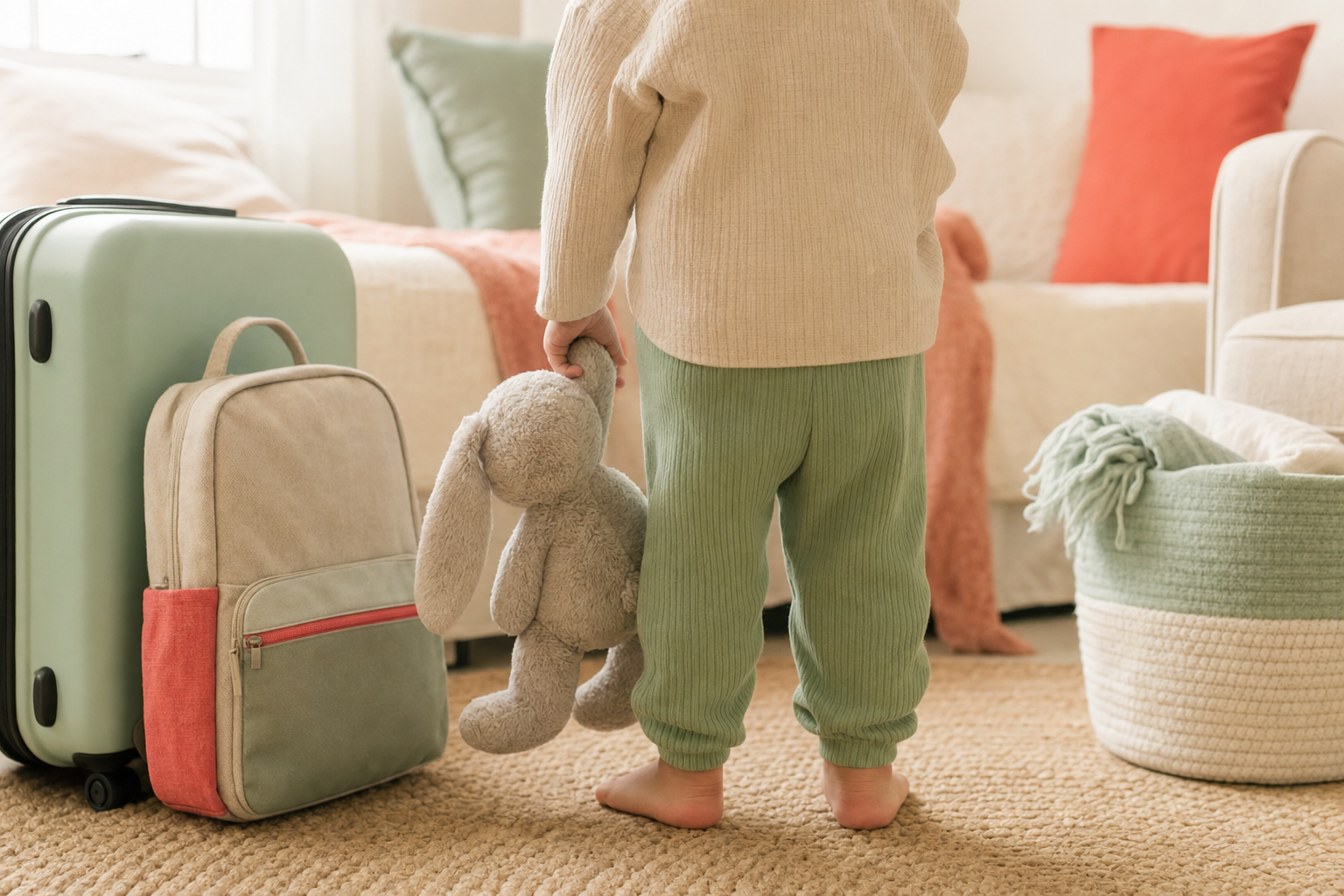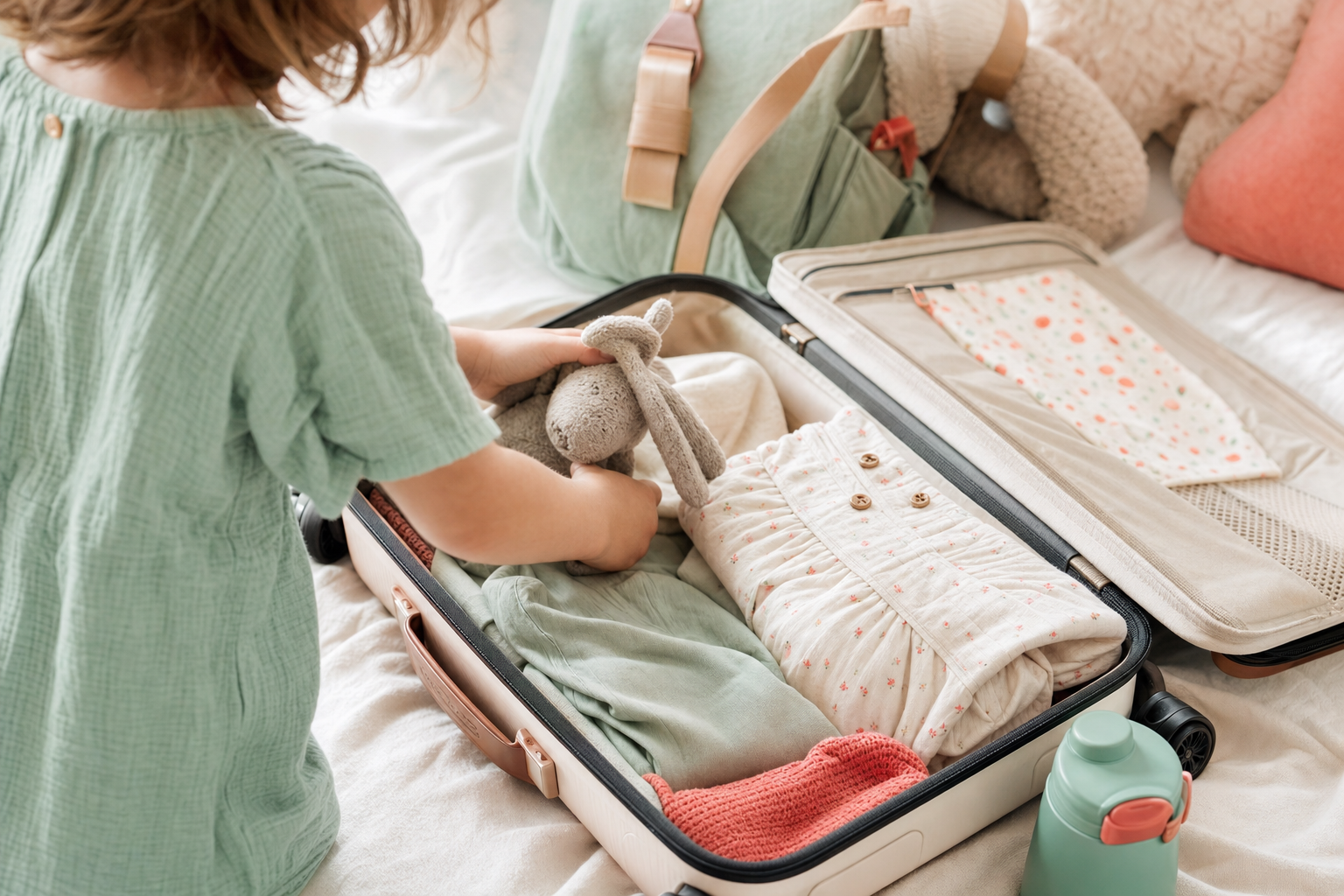
Traveling with toddlers over Thanksgiving gets easier once the big rules are settled. On the plane, the Federal Aviation Administration recommends an approved car seat for children under 2. At security, TSA allows formula, breast milk and baby food pouches above 3.4 ounces. In the car, New Jersey law keeps the youngest riders rear-facing, whether you’re leaving from Hoboken, Paramus or another of the six northern New Jersey towns where Cresthill Academy has its eight campuses. Settle those, pack familiar comforts, and save your energy for the turkey.
Key Takeaways
- A certified car seat is the safest seat on the plane: The FAA strongly discourages lap travel for children under 2 and recommends an approved car seat labeled for use in both motor vehicles and aircraft.
- Baby food and milk follow their own TSA rule: TSA allows formula, breast milk, toddler drinks, and baby food pouches over 3.4 ounces in carry-ons, and they do not have to fit in the quart-sized bag.
- Move a sleeping baby once you arrive: The AAP advises that car seats are not safe sleep spaces, so a baby who dozes off on the drive should be moved to a safe sleep space at your destination.
What should families actually know about traveling with toddlers?
The FAA recommends an approved car seat for children under 2, TSA allows baby food and milk above 3.4 ounces, and the AAP explains which seats can fly. Add New Jersey’s rear-facing law for the car, and a handful of official rules answer most of the decisions that keep parents up at night in November.
Three numbers worth knowing before you pack
Under 2 is the first number. That’s the age at which a child may legally ride on a parent’s lap, and the FAA’s Kids Corner page is direct about it: the agency strongly discourages the practice and recommends securing your child in an approved child restraint system. Lap or seat is the biggest single decision on a family flight, so the next section walks through it in detail.
Next comes the volume limit for liquids, a number worth confirming against current airport security rules before you pack. For most travelers, that number is the familiar cap on carry-on liquids. TSA’s guidance for traveling with children carves out an exception for formula, breast milk, toddler drinks and baby food, including puree pouches, so the diaper bag can carry what a long travel day actually needs.
One number worth knowing is a weight threshold. New Jersey’s rear-facing rule covers children under 2 and under 30 pounds, and it applies on every New Jersey road, from your driveway to the airport parking lot. And the AAP’s family guide to car seats connects the flying and driving pieces by explaining which seats work in both places, which is handy if you’d rather haul one seat instead of two.
Here’s our position on why rules come first: a parent who has already settled the seat, the liquids and the car setup has more patience left for the parts nobody can plan, like a delayed gate or a potty-training setback on the road. Winter germs add their own layer, and a separate read on protecting your family through cold and flu season is worth a look before the gatherings start. Settling the official rules early frees your attention for the child in front of you, which is where a good travel day is really won.
Is a lap seat safe for a child under 2?
A lap seat is legal for a child under 2, but the FAA strongly discourages it and recommends an approved car seat in the child’s own seat for the whole flight. Legal and safest are separate questions, and the federal guidance answers the safety one clearly.
Why a parent’s arms aren’t enough
Physics is the reason. The 2026 Yellow Book chapter on traveling safely with infants and children, available through the NIH’s NCBI Bookshelf, notes that severe turbulence or a crash can create enough momentum that an adult cannot hold onto a child. Even a strong, attentive parent can’t brace against forces like that. A government-approved restraint holds the child for you, which is why it’s considered the safest place for a young child on board.
We’d read the evidence this way: a lap seat is a bet that the flight stays calm, and nobody at the gate can promise that. The FAA and the Yellow Book point in the same direction. When the downside is a child an adult physically cannot hold, a seat of their own is what we’re most confident recommending.
The trade-off is real, and it’s fair to name it. Buying a seat for a child who could otherwise ride on your lap adds to the cost of a holiday fare, and carrying a car seat through an airport is one more thing to juggle with a toddler in tow. Some families book a seat for every flight; others prioritize it on the longer legs of a trip. If cost is the sticking point, talk it through with your pediatrician, who can help you weigh the options for your child and the trip you’re planning.
A seat also brings comfort a lap can’t. Your child’s own car seat is a familiar object, and the CDC’s family travel guidance suggests bringing familiar toys or other objects along to ease the change a trip brings. Both of your arms stay free for snacks and books, too. Booking a seat for a child under 2 and buckling them into an approved car seat is the option the FAA recommends for the entire flight.
Which car seats can fly, and which have to stay home?
Most rear-facing, convertible and forward-facing car seats can fly if they carry the FAA aircraft label, but the AAP’s car seat guidance says booster seats and travel vests cannot be used on airplanes. That makes a quick check of the seat you already own the first job, done at home before travel day.
Find the label before you pack
The FAA’s child restraint guidance asks parents to confirm the seat has this wording printed on it: “This restraint is certified for use in motor vehicles and aircraft.” Check every sticker on the shell, including the ones that are easy to miss. Snapping a photo of the label on your phone means you can show it quickly if a flight attendant asks.
Without that label, the FAA notes you may be asked to check the seat as baggage, which is a rough discovery at a crowded gate with a tired toddler. Boosters are a separate case. Since the AAP is clear they can’t be used on planes, plan to check yours or have one waiting at your destination for the car rides there. Travel vests fall in the same category, so leave them out of the carry-on plan entirely.
Our view: the best plane seat is usually the one your child already rides in, as long as it carries the label, because it’s familiar and you already know how to buckle it. Airline seats can be tight, so read your seat’s manual for any notes on aircraft installation before the trip. Checking for the aircraft label at home, days before Thanksgiving, is the step that keeps a car seat from becoming checked baggage at the gate.
How much formula, milk, and baby food can go through TSA?
TSA allows formula, breast milk, toddler drinks and baby food, including puree pouches, in carry-on bags in quantities over 3.4 oz (100 ml), and they don’t need to fit in the quart-sized bag. Because TSA treats them as medically necessary liquids, the usual limit doesn’t apply.
What the exception covers
Read the list closely, because it’s broader than many parents expect. Per TSA’s page on traveling with children, the exception covers formula, breast milk, toddler drinks, and baby and toddler food, so the squeeze pouches a toddler lives on during a travel day count, too. You don’t need to decant them into tiny bottles or ration them to fit the quart bag. Pack what the day realistically calls for, plus a cushion for delays.
These items still go through screening, so it helps to know what to expect at the checkpoint before you leave rather than finding out at the belt. If you’re enrolled in TSA PreCheck, TSA’s checkpoint tips for families confirm that your children may come through the PreCheck lane with you. Keeping the family together in one lane is one less thing to manage for a toddler who is done with standing still.
For nursing parents, the federal Friendly Airports for Mothers (FAM) Act matters as well. The CDC’s travel recommendations for nursing mothers explain that the law requires airports to provide a private, non-bathroom space for expressing breast milk in each terminal. Look up the space in your terminal before you fly, so you aren’t hunting for it during a tight connection.
We’d plan the liquids generously. A pouch or bottle you don’t end up using costs a little weight, while running out during a delay costs everyone’s patience. Packing baby food and milk generously, within easy reach and outside the quart bag, turns the TSA checkpoint into one of the more predictable parts of a holiday travel day.
| Founded | 2010 |
|---|---|
| Locations | 8 |
| Programs | 4 |
| Curriculum | EsteamED Curriculum |
| Curriculum pillars | 8 |
| Key features | 12 |
| Audience | Northern New Jersey families |
Pack Smart and Light (Yes, It’s Possible!)
Overpacking is tempting, but a lighter, organized bag is easier to manage through security and down the jet bridge. Sort by age and by when you’ll need each item: what stays in the carry-on, what can go in checked luggage, and what your host may already have. Ask relatives ahead of time about a crib, a high chair or a stash of diapers, since every item they can lend is one you don’t carry.
What to pack at each age
For infants. Bring the essentials: diapers, wipes, pacifiers, bottles, formula or breast milk, a couple of small toys, a change of clothes and a favorite blanket. Keep formula and milk near the top of the carry-on, since they travel outside the quart bag under TSA’s rules. A spare shirt for you belongs in there too, because spit-up rarely limits itself to the baby.
For toddlers. Lightweight strollers and baby carriers can be a lifesaver in a busy airport or at a highway rest stop. Pack a few compact toys or board books, a sippy cup, stickers or a small coloring pad, and headphones if your child uses a tablet. Hand the toys over one at a time so each one still feels new well into the trip.
For preschoolers. Give them their own small backpack with a few familiar comforts and something quiet to do, and let them help pack it. Carrying their own bag lightens your load and hands them a real job, building on the same self-direction behind independent play before preschool. A small pretend-play kit, like a toy pilot set or a few figures, can turn a gate wait into a game, and this look at why pretend play matters for toddlers and preschoolers explains the bigger picture.
For everyone. Dress in layers, since planes and cars can swing between warm and chilly, and keep a small kit of hygiene basics close: wipes, tissues, hand sanitizer and a few zip-top bags for messes. Airports and holiday tables mean lots of shared surfaces, and a simple handwashing routine for cold season is easy to keep going on the road.
Here’s our position on the carry-on: if an item won’t be needed before you reach your destination, it can go in checked luggage or stay home. Everything else in the bag should answer a near-term need, and the near-term needs of a little traveler are predictable. A carry-on built for the next feed, the next change, the next distraction and the next delay, sorted by your child’s age, is the lightest bag that still covers a long Thanksgiving travel day.

Snacks, Snacks, and More Snacks
Travel delays and unpredictable schedules can leave kids cranky and hungry, so treat snacks as delay insurance. Bring a variety that travels well and doesn’t make a mess, and pack more than the trip should need. A missed connection or a slow crawl of holiday traffic is far easier with food in the bag.
Mess-free picks by age
For infants. Ready-to-feed formula, squeeze pouches and rice rusks (if your baby has started solids) are easy options, and ready-to-feed bottles skip the mixing step in a cramped seat. Since TSA allows formula and puree pouches over 3.4 ounces, you can pack enough to cover a delay without worrying about the liquids cap. Check with your pediatrician before offering a food your baby hasn’t tried yet.
For toddlers and preschoolers. Think finger foods: crackers, fruit, cheese sticks and granola bars. Portion them into small containers so you can hand over one at a time, which stretches the supply and gives a bored child something to open. If travel days loosen your toddler’s eating rhythm, there’s a practical guide to resetting toddler snack habits for when you’re home again.
Snacks also anchor the day. Offering food around the times your child usually eats keeps a familiar rhythm going when everything else is new, and a predictable breakfast the morning after you arrive helps, too; this post on resetting toddler breakfasts has ideas you can borrow at Grandma’s table. A well-stocked snack bag, sorted by age and packed with extra for delays, is the cheapest insurance a traveling parent can carry.
What does New Jersey’s car seat law mean for the drive to Grandma’s?
New Jersey law (N.J.S.A. 39:3-76.2a) requires children under 2 and under 30 pounds to ride in a rear-facing car seat with a 5-point harness, including when grandparents or other relatives are driving. Because the rule follows the child, it applies no matter who is behind the wheel or how short the trip.
Reading the rule as written
The New Jersey Division of Highway Traffic Safety states it plainly: a child under the age of 2 years and 30 pounds shall be secured in a rear-facing seat. For a Thanksgiving drive, that means the rear-facing seat your toddler rides in at home makes the trip, too, buckled and adjusted the way its manual describes. Holiday plans often shuffle kids between cars, and the requirement comes along with your child into every one of them.
Grandparents deserve a special mention, since the rule applies just as much when a relative drives. Car seat guidance has changed over the years, and a grandparent who last buckled a child long ago may remember different habits. Walk them through your seat before the holiday, ideally in daylight and well before pickup. Show them how the harness buckles and adjusts, and let them practice once while you watch.
Rental cars and borrowed seats need the same care. If you’re flying in and renting a car, bringing your own seat lets you skip the guesswork about a borrowed seat’s history and fit, and depending on the seat, it may be usable on the plane as well. Read the manual’s installation section before you buckle it into an unfamiliar vehicle, and if anything about the fit feels uncertain, get help before the trip.
One more rule belongs on every holiday drive. Car seat safety guidance from the Middlesex County Sheriff’s Office says never to leave a child unattended in a vehicle. Rest stops and quick runs for forgotten cranberry sauce can make it tempting, so make it a family habit to bring your child with you every time. Every New Jersey car ride with a child under 2 and under 30 pounds starts with a rear-facing seat and a 5-point harness, whichever relative is driving.
Why shouldn’t a baby sleep in the car seat after you arrive?
The AAP says car seats, swings and reclined bouncy seats are not safe places for babies to sleep, so move a baby who dozes off on the drive once you arrive. A car seat is made for the ride itself, so once you’ve arrived, it’s best not to let it stand in for a crib.
A simple arrival plan
HealthyChildren.org, the AAP’s site for families, puts it directly: car seats and other sitting devices, like swings or reclined bouncy seats, are not safe sleeping environments. We understand the temptation. A sleeping baby after a long drive feels like a gift, and carrying the whole seat inside so the nap can continue is the easy path. Here’s our position: we’d accept the risk of waking the baby over leaving them asleep in the seat indoors.
Plan the landing spot before you leave. Ask your host where the baby will sleep, and if there’s no crib, bring or borrow a portable one and set it up as soon as you arrive. Check the setup against current safe-sleep guidance, and ask your pediatrician about anything you’re unsure of. Then, when you pull in, carry the baby straight to that space and leave the unpacking for after.
Sleep on the road ripples into bedtime, too. Keeping familiar pieces of your evening routine, the same song, the same book, the same sleep sack, can help a baby settle in a new room, and there’s more on why consistency counts at bedtime and on building a fall bedtime routine for toddlers if you’d like to prepare before the trip. Moving a dozing baby from the car seat to a safe sleep space as soon as you arrive is the one sleep rule worth waking a baby for.
Stay Calm and Flexible
Holiday travel can be unpredictable, but staying calm and flexible makes a real difference for everyone in the car or the row. The CDC’s guidance on traveling safely with infants and children notes that changes in schedule, activities and environment can be stressful for children. To ease that, it suggests including children in planning for the trip and bringing along familiar toys or other objects.
Small moves that lower the stress
Involve your child in the plan. A toddler can pick which stuffed animal rides along, and a preschooler can look at a map, count down the days or choose the gate snack. Talk through the trip in simple steps a few times before you go: car, airport, plane, Grandma’s house. Familiar objects matter on the road, so let a favorite blanket or toy come along for the whole journey.
Expect big feelings anyway. Young children can pick up on the adults around them, so try to stay steady when a flight is delayed or a nap gets skipped. When a toddler falls apart at the gate, these toddler tantrum tips cover calm responses, and it helps to know the difference between a tantrum and a sensory meltdown, since a loud, bright airport can overwhelm some children.
Build in extra time for unexpected stops, slow-downs and last-minute bathroom breaks, and plan breaks at parks or rest areas where kids can move around and get some fresh air. Arriving at a crowded house is its own transition, and a quieter child may need time to warm up; this guide to helping a shy toddler at big family gatherings offers gentle ways in. Thanksgiving is also a natural moment to talk about thankfulness at a child’s level, and a Thanksgiving guide to gratitude for young children has simple starting points.
Wrapping a small surprise, like a new sticker book saved for the hardest stretch, can buy a few calm minutes when everyone needs them. Keep reminding yourself that most travel hiccups turn into stories the family laughs about later, and check in with your pediatrician before a long trip, especially by air or if your child has health needs. A calm, flexible parent with a familiar toy in the bag gives a young child the steadiest footing a Thanksgiving trip can offer.
Frequently Asked Questions
What should families actually know about traveling with toddlers? The FAA recommends an approved car seat for children under 2, TSA allows baby food and milk above 3.4 ounces, and the AAP explains which seats can fly. Add New Jersey's rear-facing law for the car, and a handful of official rules answer most of the decisions that keep parents up at night in November.
Is a lap seat safe for a child under 2? A lap seat is legal for a child under 2, but the FAA strongly discourages it and recommends an approved car seat in the child's own seat for the whole flight. Legal and safest are separate questions, and the federal guidance answers the safety one clearly.
Which car seats can fly, and which have to stay home? Most rear-facing, convertible and forward-facing car seats can fly if they carry the FAA aircraft label, but the AAP's car seat guidance says booster seats and travel vests cannot be used on airplanes. That makes a quick check of the seat you already own the first job, done at home before travel day.
How much formula, milk, and baby food can go through TSA? TSA allows formula, breast milk, toddler drinks and baby food, including puree pouches, in carry-on bags in quantities over 3.4 oz (100 ml), and they don't need to fit in the quart-sized bag. Because TSA treats them as medically necessary liquids, the usual limit doesn't apply.
What does New Jersey's car seat law mean for the drive to Grandma's? New Jersey law (N.J.S.A. 39:3-76.2a) requires children under 2 and under 30 pounds to ride in a rear-facing car seat with a 5-point harness, including when grandparents or other relatives are driving. Because the rule follows the child, it applies no matter who is behind the wheel or how short the trip.